
A call sheet is the document that tells your cast and crew where to be, when to be there, and what to bring. It’s one of the most important logistics documents in film production — and on a professional set, it goes out the night before every shoot day.
If you’ve never made one before, here’s everything you need to know.
What Is a Call Sheet?
A call sheet is a daily production document distributed to cast and crew before each shoot day. It includes the shoot date, location, and address, general crew call time, individual call times for cast and specific departments, the shooting schedule for the day, safety information (nearest hospital, emergency contacts), weather and sunrise/sunset data, and any production notes for the day.
It’s typically the AD’s responsibility to prepare and send the call sheet — usually the evening before the shoot.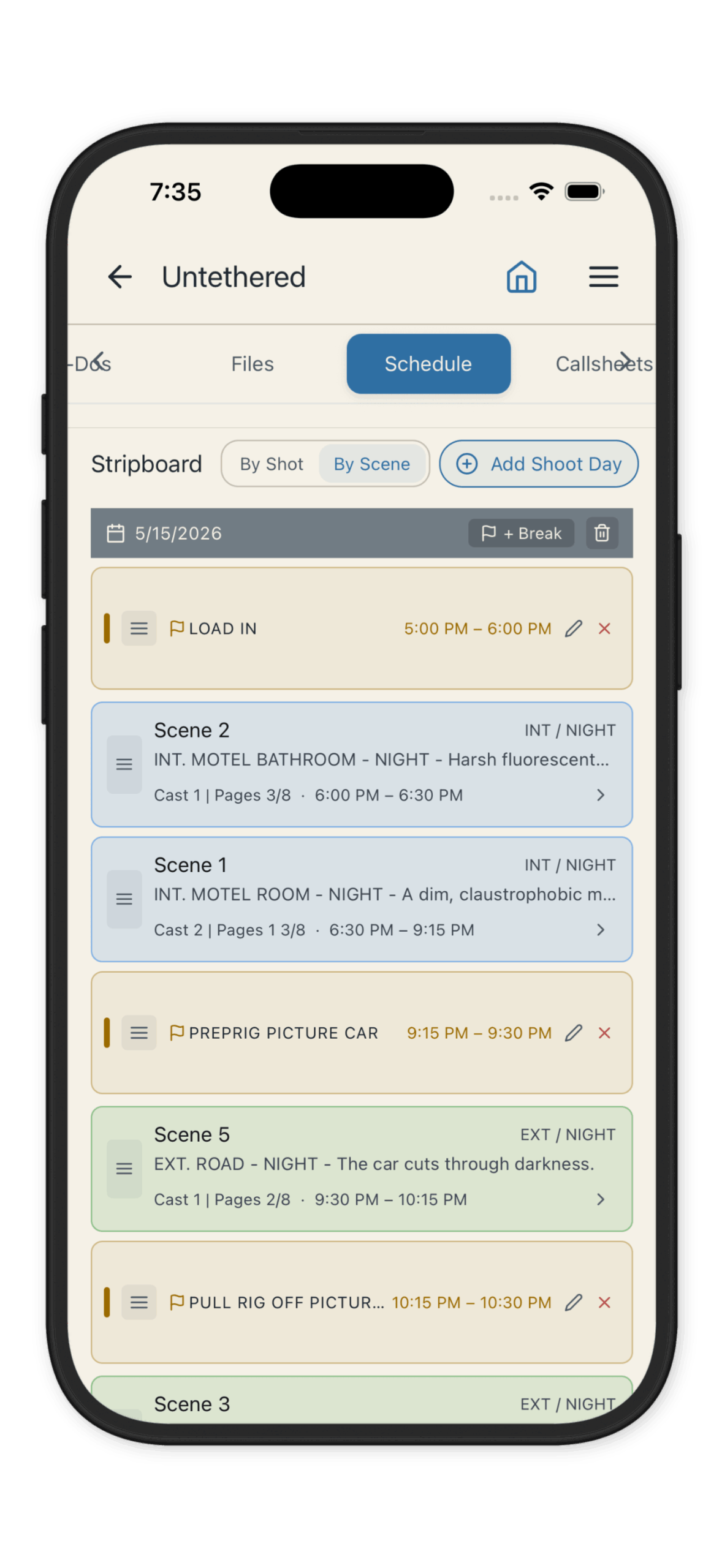
Why Call Sheets Matter
A call sheet isn’t just a schedule. It’s a legal and logistical document that confirms where people are supposed to be and what safety resources are available.
On a professional production, SAG-AFTRA contracts require call sheets be distributed before each shooting day. Insurance providers may ask for call sheet records after an incident. Department heads use them to plan their own crew’s arrival and prep time.
Even on low-budget and student productions, a call sheet signals professionalism and keeps the day running smoothly.
What to Include on a Call Sheet
- Header information: Production title, shoot date, general call time, location name and full address, weather forecast, and sunrise and sunset times.
- Cast call times: Character name, actor name, makeup and hair call, set call, and the scene numbers the actor appears in that day.
- Crew call times: Department-by-department call times and key crew contacts (Director, DP, AD, Producer).
- Shooting schedule: Scenes to be shot in order, with estimated page count, setup counts, scene descriptions, and day/night and interior/exterior designations.
- Safety information: Nearest hospital name and address, emergency contacts, and any special safety notes for the day (stunts, water, heights, etc.).
- Production notes: Parking instructions, catering schedule, and any special equipment or items to bring.
How to Format a Call Sheet
Most call sheets follow a standard two-page layout. Page one covers header info, cast call times, and the advance schedule. Page two covers crew calls, department contacts, and additional notes.
You can build a call sheet in a Word document or spreadsheet, but the formatting is time-consuming to maintain. Most professional ADs use a dedicated tool that auto-populates weather, location data, and sunrise/sunset information.
CineLog Pro’s call sheet generator does this automatically — add your cast and crew, set your call times, and the app generates a print-ready PDF you can email directly to your team.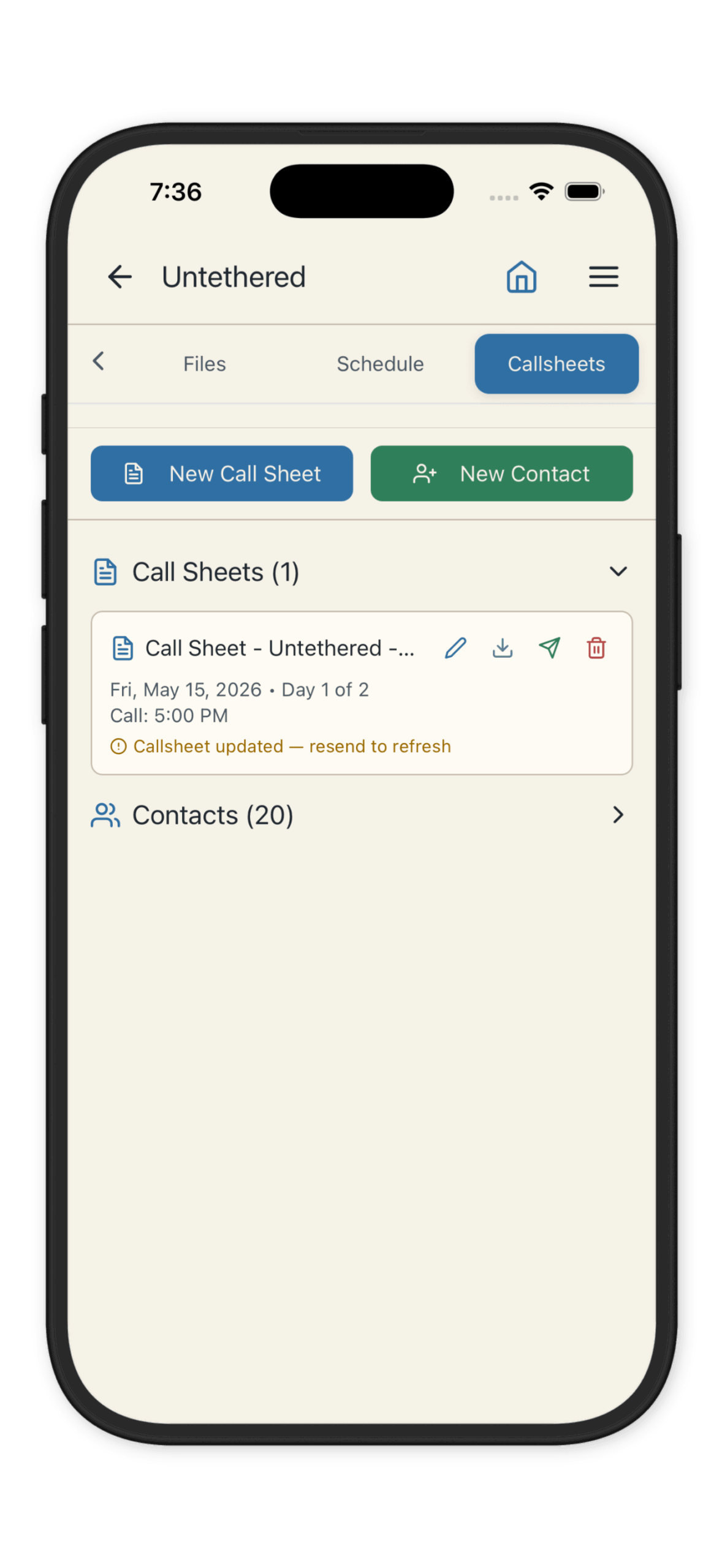
When to Send It
Call sheets go out the night before — typically between 6pm and 9pm the day prior to the shoot. Your cast and crew need time to review their call times and plan their commute, check the shooting schedule to know which scenes are up, and ask questions before the morning of the shoot.
For multi-day productions, some ADs send a preliminary call sheet a few days out with estimated call times, then a confirmed final version the night before.
Sending and Tracking Your Call Sheet
Once your call sheet is ready, send it by email as a PDF. What matters is tracking confirmations — knowing who has actually read and acknowledged their call time. CineLog Pro lets you send personalized call sheets directly from the app and track who has confirmed receipt.
The Bottom Line
A good call sheet takes about 30–60 minutes to prepare once your schedule is locked. The time investment is worth it — a clearly communicated shoot day runs faster, with fewer questions and fewer people in the wrong place at the wrong time.


