
How to location scout is one of the most underrated skills in film production. The right location can make a scene sing. The wrong one can cost you hours on shoot day — in permits, logistics, lighting problems, or noise you didn’t anticipate.
Here’s how to scout a location the right way.
What Is a Location Scout?
A location scout is the process of finding, visiting, and documenting potential shooting locations before committing to them for production. The goal is to answer two questions:
- Does this location look right for the scene?
- Can we actually shoot here?
Both matter equally. A visually perfect location that’s logistically impossible — no parking, no power, constant traffic noise — will cost you on shoot day.
Before You Go: Prep Your Location Scout
Before visiting a location, know the scene you’re scouting for (INT/EXT, day/night, mood), your shooting format and lens package, your estimated crew size, and your shooting dates. Bring your phone for photos and notes, a compass or compass app to check sun direction, and ideally a second person — a second set of eyes always helps.
 What to Look For
Visual qualities: Does the space match the script’s requirements? What’s the natural light like at the time of day you’ll be shooting? Where does the sun rise and set relative to the space? What’s the background — clean, or does it need dressing? What’s the color palette?
Practical considerations: Is there parking for trucks, vans, and crew cars? Is there access to power? What’s the ambient noise level (traffic, HVAC, neighbors)? Are there bathrooms? Is there space for catering or base camp?
Legal and logistical: Who owns the property, and will they sign a location agreement? Does shooting here require a permit? Are there noise ordinances or time restrictions? What’s the nearest hospital?
What to Document
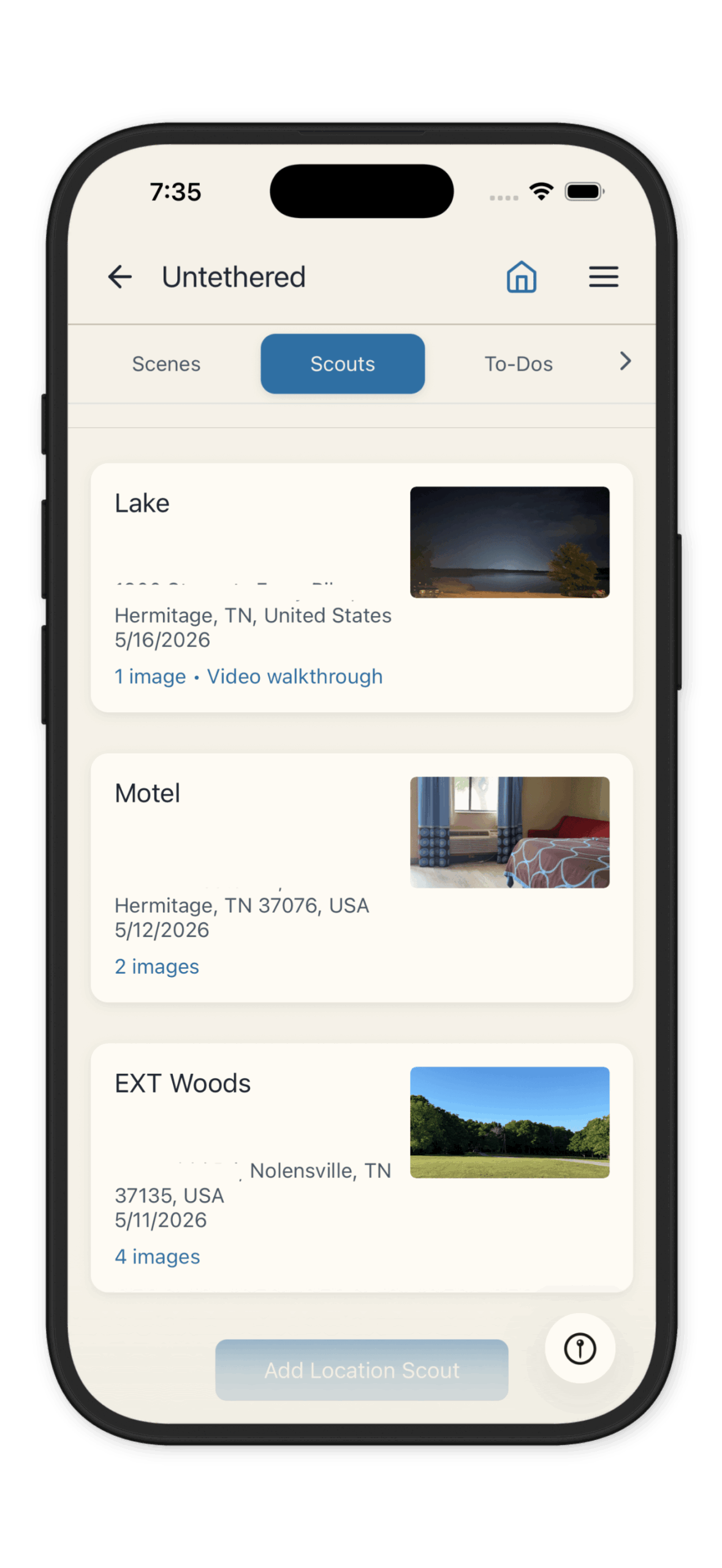
A scout is only useful if you bring back thorough documentation. For each location, capture wide photos from multiple angles, detail photos of key areas, lighting notes (direction of natural light, time of day), technical notes (power sources, ceiling height), access notes (how to get in, parking, contact name), and GPS coordinates.
The more thorough your documentation, the more confident your director, DP, and AD will be when they review the scout — especially if they can’t visit in person.
Creating a Location Scout Report
A location scout report compiles your photos, notes, and technical information into a shareable document for your production team. A good scout report includes the location name and address, GPS coordinates, contact name and agreement status, a photo gallery with captions, lighting and sun direction notes, power and access notes, and the nearest hospital.
CineLog Pro’s location scouting tools let you capture photos, add notes, geotag your coordinates, and export a polished PDF directly from your phone — so your report is ready by the time you’re back at your desk.
From Location Scout to Shoot
Once a location is approved, your scout documentation feeds directly into pre-production. The address goes onto the call sheet. The nearest hospital goes into your safety information. Your lighting notes inform your DP’s equipment list. Your access notes go to your AD for day-of logistics.
Scout early, document thoroughly, and your shoot day will run smoother because of it.


